BPC-157: Research Overview & Availability in Bali
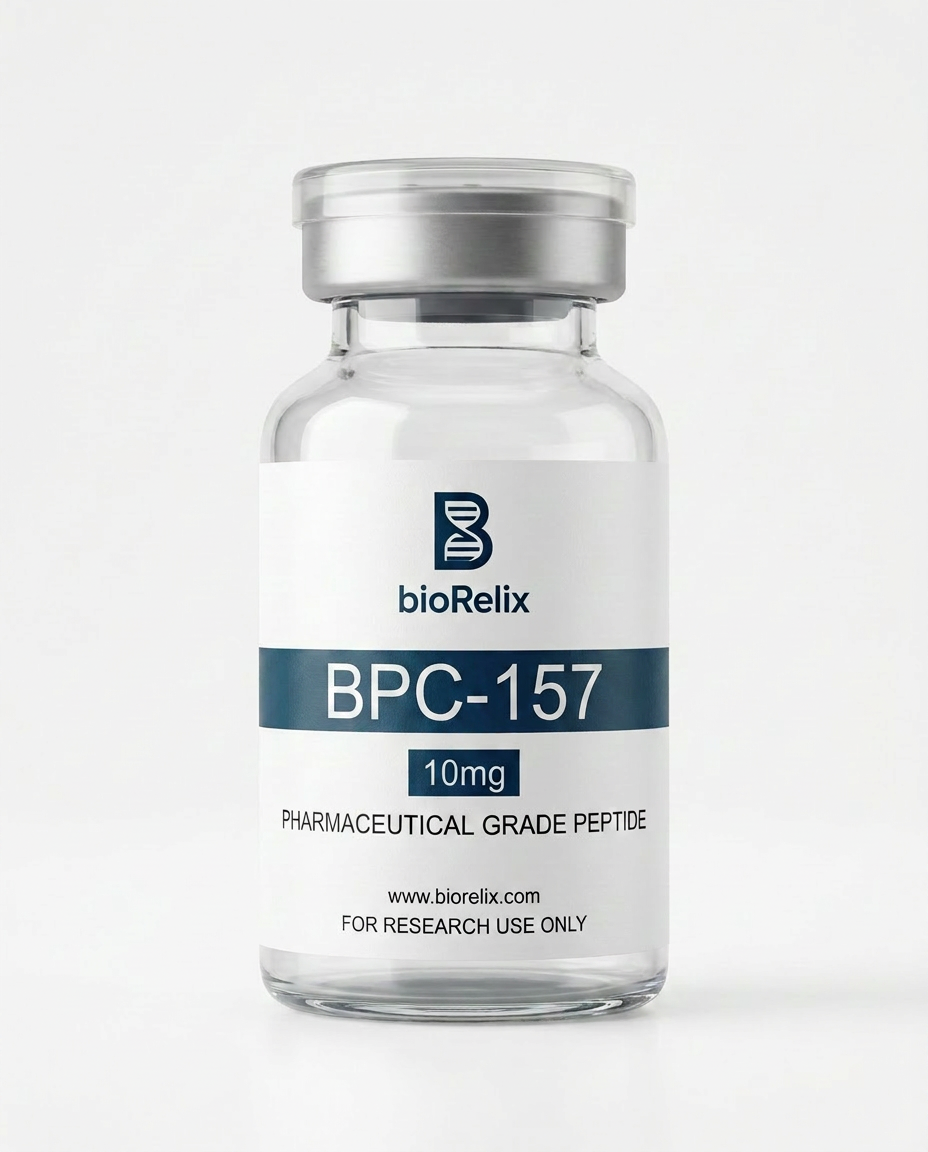
Body Protection Compound-157 (BPC-157) is a synthetic pentadecapeptide — a chain of 15 amino acids — derived from a protective protein found in human gastric juice. First isolated and characterised by researchers at the University of Zagreb under the direction of Professor Predrag Sikirić, BPC-157 has been the subject of over 100 peer-reviewed publications spanning more than two decades of laboratory and preclinical research.
The peptide's sequence (Gly-Glu-Pro-Pro-Pro-Gly-Lys-Pro-Ala-Asp-Asp-Ala-Gly-Leu-Val) does not correspond to any known gene sequence, making it a stable synthetic fragment rather than a recombinant protein. This distinction is relevant to both its regulatory classification and its research applications.
Origin and Discovery
BPC-157 was identified through systematic fractionation of human gastric juice at the Department of Pharmacology, University of Zagreb School of Medicine. Professor Sikirić's group observed that gastric juice contained cytoprotective factors beyond the known roles of mucus, bicarbonate, and prostaglandins. By isolating and synthesising the active peptide fragment, they produced a compound that could be studied in controlled experimental settings independent of the complex gastric juice milieu.
The compound's designation — "Body Protection Compound" — reflects the breadth of tissue systems in which researchers have observed activity, from gastrointestinal mucosa to musculoskeletal, vascular, and neurological tissue models.
Published Research: Studied Mechanisms
The majority of published BPC-157 research has been conducted in rodent models and in vitro cell culture systems. While this limits direct extrapolation to human biology, the consistency and volume of published findings across multiple research groups and tissue systems is notable. Key studied mechanisms include:
Angiogenesis
Multiple publications from Sikirić et al. have documented BPC-157's apparent role in promoting new blood vessel formation. In a 2014 study published in the Journal of Physiology and Pharmacology, researchers observed accelerated formation of granulation tissue and blood vessel density in cutaneous wound models. The proposed mechanism involves upregulation of VEGF (vascular endothelial growth factor) expression, though the precise signalling cascade remains under investigation.
Nitric Oxide System Modulation
BPC-157 has been studied extensively for its interaction with the nitric oxide (NO) system. Sikirić et al. (2014) and Seiwerth et al. (2018) reported that BPC-157 appears to modulate both the constitutive (eNOS) and inducible (iNOS) nitric oxide synthase pathways, potentially acting as a stabiliser of NO production rather than a simple agonist or antagonist. This bidirectional modulation has been proposed as a mechanism underlying the peptide's observed activity across diverse tissue types.
Growth Factor Signalling
Published data suggests BPC-157 may influence several growth factor pathways:
- EGF receptor: Enhanced expression observed in intestinal mucosal models (Tkalcević et al., 2007)
- NGF and VEGF: Upregulation documented in tendon and ligament healing models (Chang et al., 2011)
- FAK-paxillin pathway: Activation observed in fibroblast migration studies, suggesting a role in tissue remodelling (Hsieh et al., 2017)
Gastrointestinal Protection
As a compound derived from gastric juice, BPC-157 has been most extensively studied in GI tissue models. Published research includes observations of activity in models of:
- Ethanol-induced gastric lesions (Sikirić et al., 1993)
- NSAID-induced intestinal damage (Sikirić et al., 2006)
- Inflammatory bowel disease models (Cesarec et al., 2013)
- Oesophageal and colonic anastomosis healing (Sikirić et al., 2010)
Musculoskeletal Tissue
A significant body of published research examines BPC-157 in musculoskeletal contexts:
- Tendon healing: Staresinic et al. (2003) reported accelerated Achilles tendon healing in a rat transection model
- Ligament repair: Chang et al. (2011) documented enhanced medial collateral ligament healing with increased type I collagen expression
- Muscle healing: Novinscak et al. (2008) observed accelerated muscle healing in a crush injury model
- Bone healing: Sebecić et al. (1999) reported effects on segmental bone defect repair in rabbit models
Neuroprotective Observations
More recent publications have explored BPC-157 in neurological models. Sikirić et al. (2017) published data suggesting protective effects in models of peripheral nerve injury, while Tudor et al. (2010) documented observations in dopaminergic system models. These findings remain preliminary and have not been replicated in human studies.
Limitations of Current Research
It is important to note several limitations of the existing BPC-157 literature:
- The vast majority of studies originate from a single research group (University of Zagreb), though independent groups in Taiwan, South Korea, and elsewhere have published corroborating findings
- Published data is overwhelmingly from animal models and in vitro systems — no Phase I, II, or III human clinical trials have been completed or published as of this writing
- Dosing, route of administration, and duration vary significantly across studies, making direct comparison difficult
- Some proposed mechanisms (particularly the NO modulation hypothesis) remain speculative and require further elucidation
Handling and Storage
BPC-157 is supplied as a lyophilised (freeze-dried) white powder in a sealed glass vial. Proper handling is essential:
- Storage (unreconstituted): 2–8°C, protected from light. Stable for 12+ months
- Reconstitution: Use bacteriostatic water. See the Reconstitution Guide for step-by-step instructions
- Post-reconstitution: Refrigerate at 2–8°C, use within 28 days
- Handling: Aseptic technique required — alcohol-swab vial tops, use sterile syringes, avoid touching needle tips
Legal Status in Indonesia
BPC-157 is not a controlled substance in Indonesia. It is not scheduled by BPOM as a registered pharmaceutical product, nor is it listed on the BNN controlled substances register. As a synthetic research peptide, it occupies a distinct regulatory category from approved medicines.
BioRelix supplies BPC-157 strictly for personal research use. We do not make therapeutic claims, provide dosing recommendations, or offer medical advice.
Comparison with TB-500
BPC-157 is frequently studied alongside TB-500 (a synthetic fragment of thymosin beta-4), as the two peptides have been observed to act through complementary mechanisms. For a detailed comparison, see the BPC-157 vs. TB-500 comparison guide.
BPC-157 10mg and BPC-157 + TB-500 Blend (5mg + 5mg) — research-grade, HPLC tested ≥98% purity, locally stocked in Bali with same-day cold-chain delivery. Bacteriostatic water and syringes included with every order.
View in Shop →References cited: Sikirić et al., J Physiol Pharmacol 1993, 2006, 2010, 2014, 2017; Seiwerth et al., Curr Pharm Des 2018; Tkalcević et al., Life Sci 2007; Chang et al., J Orthop Res 2011; Hsieh et al., Peptides 2017; Staresinic et al., J Orthop Res 2003; Novinscak et al., J Physiol Pharmacol 2008; Sebecić et al., Bone 1999; Cesarec et al., J Physiol Pharmacol 2013; Tudor et al., J Physiol Pharmacol 2010.